
Early Life and Family in Wartime Amsterdam
Gabi Goslar was born Rachel Gabriele Ida Goslar on October 25, 1940 in Amsterdam, Netherlands — a city already under Nazi occupation. Her parents, Hans Goslar and Ruth Judith Klee, were German Jews who had left Germany after Adolf Hitler’s rise to power in 1933. The family initially sought refuge in Amsterdam, hoping to build a peaceful life free from persecution. Despite their efforts to create normalcy, the tightening grip of anti‑Jewish laws and Gabi Goslar escalating violence meant that even young children like Gabi were born into an atmosphere Gabi Goslar of fear and uncertainty.
From her earliest days, Gabi’s life was framed by the realities of war and persecution. She was born after the German invasion of the Netherlands, and her Gabi Goslar parents struggled to protect their family amid increasing restrictions on Jewish movement, employment, and civil rights. Gabi’s older sister, Hannah Elisabeth “Hanneli” Pick‑Goslar, was already Gabi Goslar a vivid presence in her life, though Gabi was too young to fully understand the looming threat. The family maintained a bond of affection and hope in a community that was rapidly unraveling under oppression.
Tragically, Gabi’s mother died around the time of her birth in 1942, a loss that left the young family grieving. Her father, Hans, took on the responsibility of raising both girls in the harshest of circumstances. These early years — marked by personal loss and political terror — set the stage for the family’s eventual arrest and deportation. As with many Jewish families Gabi Goslar in Amsterdam at the time, the Goslars’ hope for safety was overshadowed by the brutal reality Gabi Goslar of Nazi policies that sought to strip away not just rights, but lives.
Arrest, Deportation, and Westerbork Transit Camp
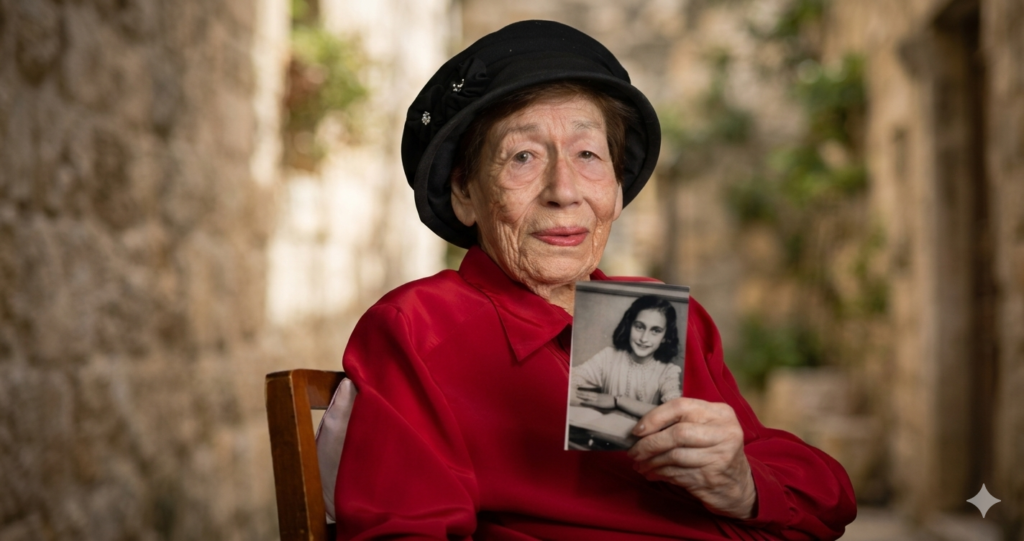
On June 20, 1943, the Goslar family was rounded up in a major deportation sweep in Amsterdam. The Nazis had implemented systematic round‑ups of Jewish families across occupied Europe, and in this operation their entire household — including four‑year‑old Gabi — was taken from their home. The family was forced into packed transport vans and sent to Westerbork, a transit camp in northeastern Netherlands where tens of thousands of Jews were held before being shipped to concentration and extermination camps.
Westerbork transit camp was grim and chaotic, offering little respite from fear and disease. For a child so young, every day was a struggle under the brutal conditions of overcrowding, inadequate food, and constant anxiety. Although camp life was harsh for people of all ages, children were especially vulnerable to illness and trauma. Gabi’s survival during this period was linked closely to the care of her sister Hannah and the resilience of her father, who did everything he could to protect his daughters from the worst outcomes.
After spending several months in Westerbork, Gabi, Hannah, and their father were deported to the notorious Bergen‑Belsen concentration camp in February 1944. Unlike extermination camps designed solely for murder, Bergen‑Belsen’s brutality came through starvation, rampant disease, and neglect. For a young child, the shock of barbed wire, barracks, and constant fear would have been incomprehensible — yet Gabi endured these horrors alongside her sister, a testament to her remarkable resilience even at such a tender age.
Life in Bergen‑Belsen: Hardship and Survival
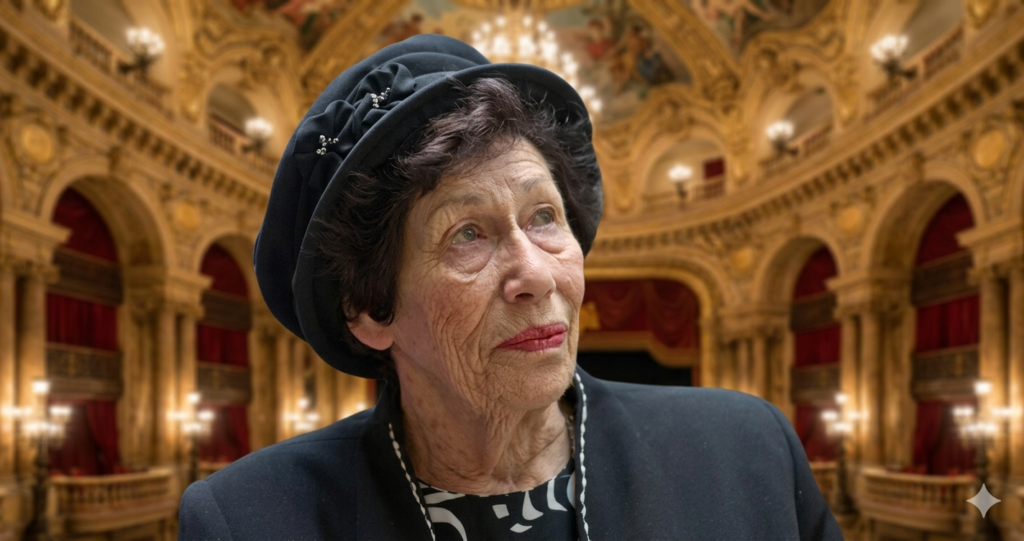
Bergen‑Belsen was one of the most horrific environments of the Holocaust, especially in the final years of World War II. The camp was originally established as a prisoner‑of‑war camp but later became a detention site for Jews from across Nazi‑occupied Europe. Gabi and her sister experienced the relentless struggle for survival as food supplies dwindled, disease spread, and despair became commonplace. Many inmates died daily, and children were among the most vulnerable.
Despite the brutal conditions, Gabi survived these years largely under the care and watchful eye of her older sister Hannah. The bond between the sisters was a crucial lifeline in a world that had lost humanity. Together they endured starvation, disease, and the psychological burden of life in a concentration camp where it was unclear who might live until the next sunrise. Their father, Hans, succumbed to illness and exhaustion during early 1945, compounding the sisters’ suffering and leaving them alone in the midst of chaos.
During their imprisonment, the Goslar sisters faced daily uncertainty. Bergen‑Belsen did not operate gas chambers like Auschwitz, but survival was no less precarious. Typhus, tuberculosis, and malnutrition were rampant, and many prisoners perished from simple causes that in normal conditions would have been treatable. That Gabi survived this period — so young and exposed to such extreme hardship — speaks to a combination of resilience, sisterly care, and extraordinary luck under the cruel circumstances of the Nazi camp system.
The “Lost Train” and Liberation
As the Allies advanced in early 1945, the Nazis evacuated many concentration camps in a desperate attempt to move prisoners deeper into German territory. Gabi and Hannah were among those loaded onto one of the so‑called “Lost Trains” — trains that were meant Gabi Goslar to transport inmates to other camps but instead wandered for days without clear direction. These journeys were among the last, most brutal episodes of the Holocaust, with little food, no sanitation, and extreme suffering for those already weakened by years of imprisonment.
The Lost Train that carried the Goslar sisters wound through eastern Germany for nearly two weeks in harsh conditions. Many prisoners did not survive the journey, collapsing from hunger, dehydration, and disease. Eventually, as the Allied forces closed in, the train Gabi Goslar came to a halt and was liberated. In this moment of freedom, Gabi and her sister were physically free, but the weight of what they had endured stayed with them forever.
After liberation, Gabi and Hannah were transported back to Amsterdam, where they received initial medical care and began the long process of recovery. They were among the few members of their extended family to survive — a stark reminder of the scale of loss that millions of Jewish families faced during the Holocaust. Their survival, against all odds, laid the foundation for rebuilding their lives in a world forever altered by war and genocide.
Post‑War Recovery and Emigration to Israel
Once back in Amsterdam after liberation, Gabi and her sister faced the immense challenge of healing from their traumatic past. Both were severely malnourished and ill when they returned, and they required extended care. In the chaotic immediate post‑war period, Gabi Goslar many survivors like the Goslar sisters had to find new ways of reconnecting with life after years of deprivation and loss. Their recovery was slow, marked by both physical healing and the psychological effort to make sense of what they had endured.
In 1947, Hannah and Gabi emigrated to what was then Mandatory Palestine, later the State of Israel. This migration was part of a larger movement of Holocaust survivors seeking hope and renewal in a land where many Jewish communities were being rebuilt after the devastation of the war. In Israel, both sisters worked to reestablish a sense of normalcy. Hannah trained as a nurse and dedicated much of her life to caring for children, reflecting a deep commitment to life and healing after trauma.
Gabi also embraced the task of building a new Gabi Goslar life in Israel, though she lived more privately than her sister, who became internationally known for sharing her memories of Anne Frank and the Holocaust. Gabi married, raised a family, and contributed to her community without seeking the spotlight. Her quieter path is an important reminder that not all survivors chose public testimony — but every survivor’s life is a profound legacy of resilience and courage.
Connection to Anne Frank and Broader History
While Gabi was too young to have a direct friendship with Anne Frank, her story is deeply connected to one of the most widely known personal narratives of the Holocaust. Her sister Hannah Pick‑Goslar was Anne Frank’s best friend from early childhood in Amsterdam, and their families were neighbors before the war. Hannah’s memories — recorded in books, films, and public testimony — have helped millions understand the human reality behind Anne Frank’s diary and the broader history of Jewish life under Nazi occupation.
The Goslar family’s experience overlaps with Anne Frank’s story in profound ways. Both families fled Nazi Germany and eventually faced deportation from Amsterdam. Hannah even saw Anne briefly in Bergen‑Belsen, recognizing her voice through a Gabi Goslar barbed‑wire fence. These intersections in their lives humanize the enormous historical tragedy by grounding Gabi Goslar it in personal bonds, friendships, and recognizable human emotions.
Although Gabi’s life was shaped by events she was too young to document herself, her survival adds depth to the narrative of the Holocaust’s impact on Jewish children. Her story is often remembered in conjunction with Anne Frank’s legacy, not as a parallel diary, but as a continuous thread in a larger tapestry of memory. By understanding Gabi’s life, we Gabi Goslar gain a fuller picture of how countless families were affected, how children endured unfathomable hardship, and how the stories of survivors continue to shape education and remembrance today.
Legacy, Memory, and Holocaust Remembrance
Today, Gabi Goslar’s life remains an enduring testament to survival and the importance of historical memory. As one of the few people directly tied through Gabi Goslar family to both the Holocaust’s horrors and the narrative of Anne Frank’s circle, her biography Gabi Goslar carries both educational and emotional weight. Her experiences remind us that behind every famous Gabi Goslar memoir or historical account are countless personal stories of families disrupted, lives lost, and Gabi Goslar resilience sustained.
Although Gabi chose a quieter life compared to the public advocacy Gabi Goslar of her sister, her existence itself speaks volumes. Through her continued presence in Gabi Goslar Israel and the active remembrance of her family’s story, she helped keep alive an unvarnished truth about the Holocaust that resonates with educators, historians, and new generations. Her life underscores the necessity of telling every survivor’s story — not just the most famous — so that the complexities of history are fully understood.
In the context of Jewish history and Holocaust education, Gabi’s story reinforces crucial lessons about prejudice, persecution, and the resilience of human beings in the face of unimaginable cruelty. Her life encourages reflection on how societies can prevent similar atrocities in the future and highlights the importance of empathy, tolerance, and remembrance in a world where echoes of the past continue to shape the present.
