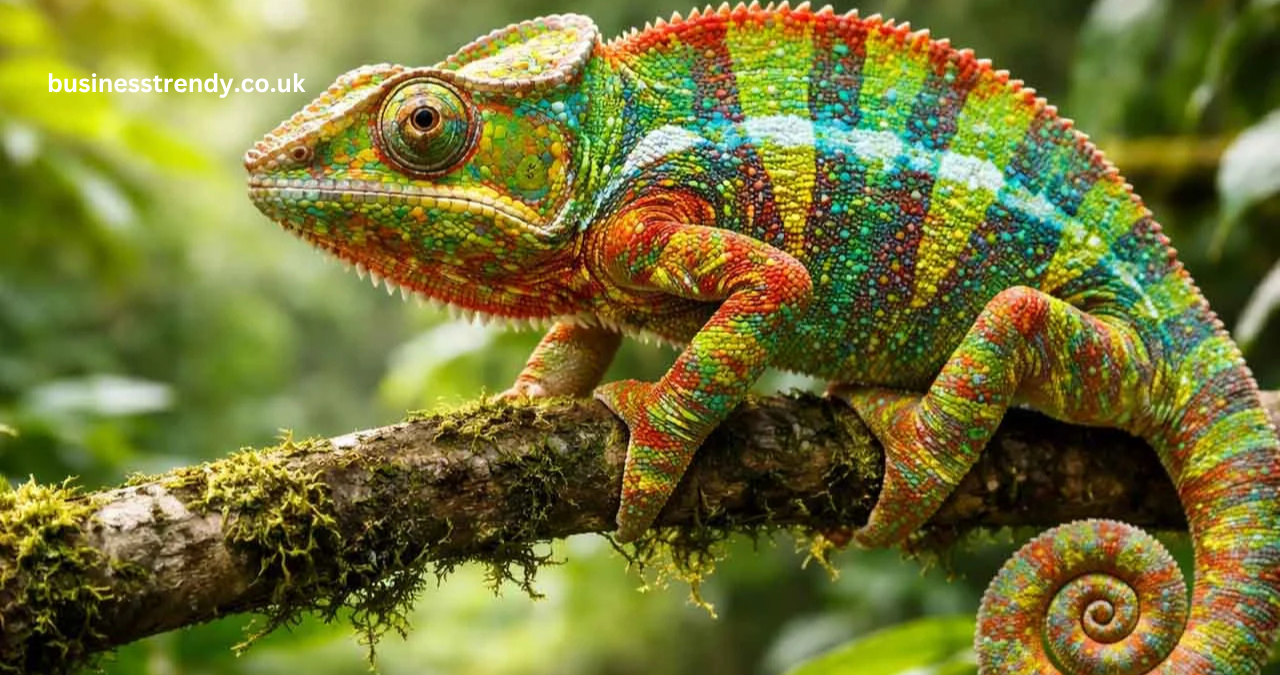
Chameleónovité, known scientifically as the family Chamaeleonidae, represents one of the most specialized and visually distinctive groups of lizards in the reptile world. These reptiles are commonly called chameleons and are famous for their ability to change skin color, slow deliberate movements, and unique body structures. They are part of the larger reptile order Squamata, which also includes snakes and other lizards, but chameleons form a highly evolved and separate branch within this group.
The family Chamaeleonidae includes a wide range of species that differ in size, color, and habitat preferences. Some are only a few centimeters long, while others can grow to impressive lengths exceeding half a meter. Despite their differences, all chameleons share key biological traits such as independently moving eyes, zygodactyl feet, and specialized tongues used for capturing prey. These shared features make chameleónovité one of the most recognizable reptile families.
In nature, chameleons are mostly arboreal, meaning they spend most of their lives in trees and shrubs. Their body design is perfectly adapted for gripping branches and remaining stable in elevated environments. Over millions of years, these reptiles have evolved into highly efficient ambush predators, relying on stealth, patience, and precision rather than speed.
Taxonomy and Evolution of Chameleónovité
The taxonomic classification of chameleónovité places them within the family Chamaeleonidae, under the suborder Iguania. This group also includes iguanas and related lizards, but chameleons stand out due to their extreme specialization. Within the family, several genera such as Chamaeleo, Furcifer, and Calumma represent different evolutionary branches adapted to specific ecological niches.
Evolutionary studies suggest that chameleons originated millions of years ago, most likely in Africa or Madagascar. Madagascar, in particular, is considered a major evolutionary center for chameleon diversity, hosting nearly half of all known species. This isolation allowed chameleons to evolve in unique directions without strong competition from other reptiles.
Over time, chameleónovité developed traits that are rare or completely absent in other reptiles. Features like projectile tongues and stereoscopic vision evolved as survival mechanisms for hunting insects in dense vegetation. These evolutionary adaptations demonstrate how environmental pressures shaped chameleons into highly efficient and specialized predators.
Geographic Distribution and Natural Habitat
Chameleónovité are primarily distributed across Africa and Madagascar, but their range extends into southern Europe, the Middle East, and parts of South Asia. Some species have also been introduced into other regions through human activity, where they sometimes establish small localized populations. This broad distribution highlights their adaptability to different ecological conditions.
Their natural habitats vary widely, including tropical rainforests, dry savannas, semi-arid regions, and mountainous forests. Each species tends to specialize in a particular type of environment, depending on its evolutionary background. Dense vegetation is especially important because it provides both camouflage and hunting opportunities.
Despite their adaptability, chameleons are still highly dependent on stable ecosystems. They require environments with sufficient humidity, temperature balance, and vegetation density. Habitat destruction and climate change have increasingly affected many chameleon populations, making habitat conservation a critical issue for the survival of chameleónovité worldwide.
Physical Structure and Unique Adaptations
The physical structure of chameleónovité is one of the most specialized in the reptile world. Their feet are shaped into gripping structures known as zygodactyl limbs, where toes are fused into opposing groups. This allows them to hold onto branches with remarkable strength and stability, even in windy conditions or on narrow surfaces.
Another key adaptation is their independently rotating eyes. Each eye can move separately, giving chameleons a nearly complete field of vision. This allows them to observe their surroundings for predators and prey at the same time. When hunting, both eyes can focus forward to provide precise depth perception.
Chameleons also possess a prehensile tail in many species, which acts like a fifth limb for balance and support. Combined with their slow, controlled movements and flattened body shape, these adaptations make them perfectly suited for life in trees. Their entire anatomy reflects millions of years of evolution focused on arboreal survival.
Color Change Mechanism and Biological Function
The ability of chameleónovité to change color is one of the most misunderstood traits in the animal kingdom. While many people believe this adaptation is mainly for camouflage, scientific research shows that color change is primarily used for communication, temperature regulation, and emotional signaling. It plays a far more complex role than simple blending into surroundings.
Color changes occur through specialized skin cells called chromatophores and iridophores. These cells contain pigments and reflective structures that shift light in different ways, creating a wide range of visible colors. By adjusting these cells, chameleons can transition between green, brown, yellow, red, and even bright blue tones depending on their condition.
This color-changing ability is closely linked to behavior. Males often display vibrant colors during territorial disputes or mating rituals, while stressed or threatened individuals may become darker. Temperature also influences coloration, as darker tones help absorb heat while lighter shades reflect sunlight. This multifunctional system makes chameleons one of the most visually dynamic reptiles on Earth.
Feeding Behavior and Hunting Strategy
Chameleónovité are primarily insectivores, feeding on insects such as crickets, grasshoppers, flies, and moths. Some larger species may also consume small vertebrates like lizards or birds when the opportunity arises. Their diet depends heavily on habitat and prey availability, making them opportunistic hunters in many environments.
Their hunting strategy is based on patience and precision. Instead of chasing prey, chameleons remain motionless and wait for an insect to come within range. Once the target is close enough, they launch their tongue at extraordinary speed, capturing the prey with a sticky tip designed for maximum efficiency.
The tongue mechanism is one of the fastest biological systems known in reptiles. It can extend longer than the chameleon’s body in some species, allowing them to strike from a distance without moving their position. This reduces the chance of detection and makes them highly effective ambush predators in dense vegetation.
Reproduction and Development Cycle
Reproduction in chameleónovité varies depending on species, but most follow a seasonal breeding pattern. Males often become highly territorial during mating periods, using bright color displays and body movements to attract females and warn rival males. These visual signals reduce the need for physical confrontation.
After mating, females either lay eggs or give birth to live young, depending on the species. Egg-laying species bury their eggs in soil or hidden locations, where they incubate for several months under natural environmental conditions. The incubation period varies based on temperature, humidity, and species type.
Newly hatched chameleons are fully independent from birth. They receive no parental care and must immediately begin hunting small prey to survive. Their survival depends on instinct, camouflage, and rapid adaptation to environmental conditions, making early life stages extremely vulnerable.
Behavior, Communication, and Daily Life
Chameleónovité are generally solitary animals that prefer to live alone outside of mating periods. They are highly territorial and often avoid direct contact with other individuals. Their behavior is slow and deliberate, which helps them avoid detection by both predators and prey.
Communication among chameleons is primarily visual. They use color changes, body posture, and subtle movements to convey messages. For example, head bobbing or body inflation can signal aggression or dominance, while calm coloration indicates non-threatening behavior.
Most chameleons are diurnal, meaning they are active during daylight hours. They begin their day by basking in sunlight to regulate body temperature. As the day progresses, they move slowly through vegetation in search of food, while at night they remain motionless and rely on camouflage for protection.
Conservation Status and Human Impact
Many species of chameleónovité are currently facing significant threats due to habitat loss, deforestation, and environmental degradation. As forests are cleared for agriculture and urban development, chameleons lose essential habitats required for feeding, reproduction, and survival.
Another major threat is the illegal wildlife trade. Chameleons are often captured and sold as exotic pets, which can severely reduce wild populations when not properly regulated. Although international conservation laws exist, enforcement remains inconsistent in some regions.
Conservation efforts focus on habitat protection, captive breeding programs, and stricter wildlife trade regulations. Public awareness is also important, as responsible ownership and ecological education can help reduce pressure on wild populations. Protecting chameleónovité ensures the survival of one of the most unique reptile families on the planet.
