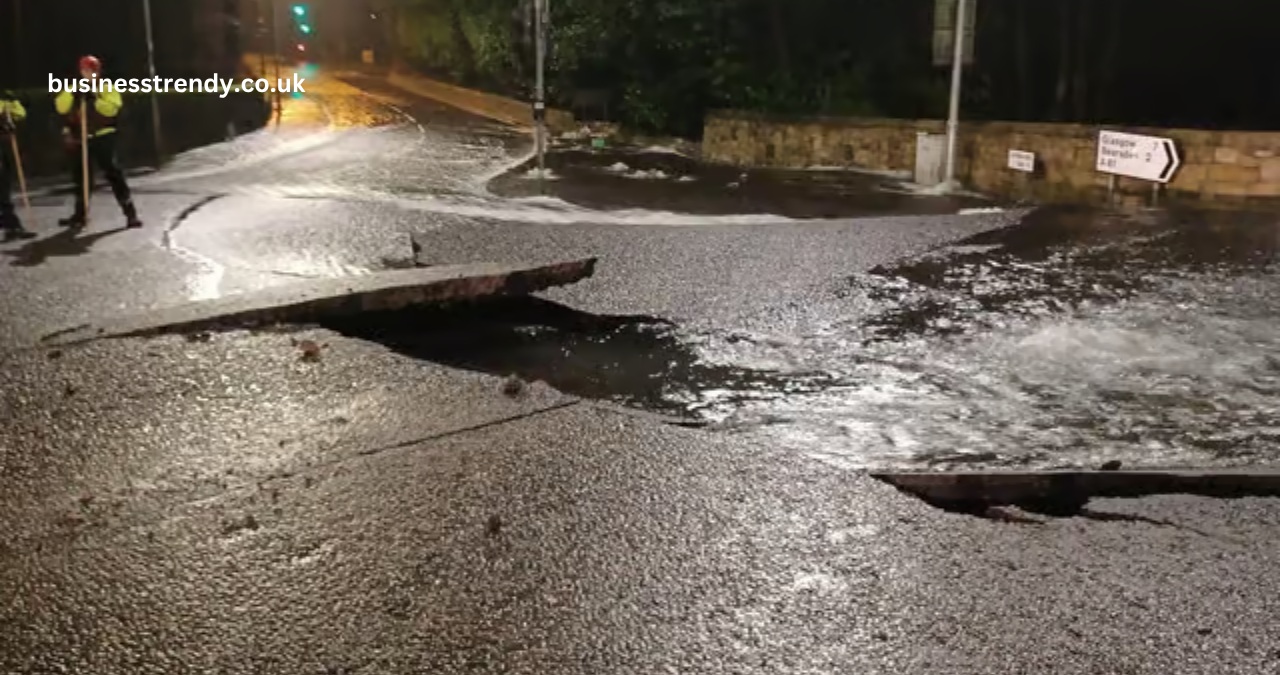
The Glasgow water main break Shettleston Road represents a significant example of how aging urban infrastructure can suddenly disrupt a densely populated city environment. The incident involved the failure of an underground water main beneath one of the East End’s busiest transport corridors, resulting in surface flooding, emergency road closures, and interruptions to local water supply services. Events like this are increasingly discussed in relation to infrastructure stress in older UK cities.
Shettleston Road is a major route that connects residential communities with commercial zones, meaning any disruption has immediate and widespread effects. When the water main burst, high-pressure water rapidly escaped from the underground pipe system and surfaced through the road structure, creating hazardous conditions for both vehicles and pedestrians. This sudden release of water also overwhelmed nearby drainage systems, which were not designed to handle such volume in a short period.
From a broader perspective, the incident highlights how essential water distribution systems operate beneath everyday urban life without notice until something goes wrong. The Shettleston Road event quickly became a case study in emergency infrastructure response, showing how critical rapid intervention is in preventing further damage to public roads, utilities, and surrounding properties.
Exact Location and Timeline of the Incident
The water main break occurred beneath Shettleston Road in Glasgow’s East End, an area known for high residential density and continuous traffic flow throughout the day. The affected section is particularly important because it serves as a key connector between several surrounding neighborhoods, meaning even a short disruption can significantly impact mobility and access.
The incident reportedly began during morning operational hours when water demand and system pressure are typically elevated. The underground pipe failure led to water surfacing quickly, with visible flooding spreading across sections of the road within minutes. This rapid escalation made it necessary for authorities to respond immediately to prevent accidents and further structural damage to the road surface.
As emergency teams arrived, the situation developed into a coordinated containment operation. Water flow was gradually isolated using valve shutoffs across the network, while traffic was redirected away from the affected zone. The timeline from initial rupture to full containment demonstrates how quickly underground infrastructure failures can evolve into large-scale urban disruptions when they occur in high-density areas.
Immediate Impact on Residents and Local Businesses
Residents living near Shettleston Road experienced immediate disruptions to their daily routines, particularly related to water supply stability. Many households reported temporary reductions in water pressure, while some faced short-term interruptions as the system was isolated for repair work. These effects are typical in major water main failures, especially in interconnected urban networks where a single break can affect multiple streets.
Local businesses along the affected stretch also felt the impact within hours of the incident. Shops, service providers, and small commercial establishments had to adjust operations due to restricted access and reduced customer movement. In some cases, businesses located closest to the flooding area experienced temporary closures, particularly where water had pooled near entrances or service points.
Beyond immediate physical disruption, there was also a broader economic and logistical effect on the community. Delivery schedules were delayed, supply routes were diverted, and customer traffic declined significantly during the closure period. These combined challenges illustrate how dependent local economies are on stable infrastructure functioning beneath the surface.
Traffic Disruption and Road Closures in the East End
The water main break on Shettleston Road caused one of the most significant traffic disruptions in the East End during the incident period. As the road began to flood, authorities quickly implemented closures to prevent vehicles from entering hazardous sections. This included both inbound and outbound traffic restrictions along key stretches of the route.
Public transport systems were also heavily affected, with bus routes diverted onto alternative streets. These diversions created congestion in surrounding areas, as roads not designed for heavy traffic volumes suddenly had to absorb increased vehicle flow. Commuters experienced extended journey times, especially during peak morning and afternoon travel periods.
Pedestrian access was similarly restricted due to safety concerns around unstable surfaces and active repair zones. Barriers and signage were placed to redirect foot traffic away from flooded areas, ensuring public safety while emergency teams worked on-site. The combined impact of these restrictions highlighted how a single infrastructure failure can temporarily reshape movement patterns across an entire district.
Causes Behind the Water Main Failure in Glasgow
The underlying causes of the Shettleston Road water main break are closely linked to the condition of aging infrastructure beneath Glasgow’s urban landscape. Many of the city’s water pipes were installed several decades ago, and over time, materials such as cast iron and older steel become more susceptible to corrosion, weakening, and eventual rupture under pressure.
Another contributing factor is the natural variation in water pressure across the distribution network. In busy urban zones, pressure must remain high enough to serve residential and commercial demand, but this also places continuous stress on older pipe joints. When combined with environmental factors such as ground movement or seasonal temperature changes, the risk of failure increases significantly.
External influences may also play a role, including heavy road traffic above ground and nearby construction activity that can cause vibration and soil disturbance. Over time, these cumulative stresses reduce the structural integrity of underground pipes. The Shettleston Road incident is therefore best understood as the result of long-term wear rather than a single isolated cause.
Emergency Response and Repair Operations
Emergency response teams acted quickly following reports of flooding on Shettleston Road, with utility engineers and local authorities arriving on site within a short time frame. The first stage of response involved identifying the exact location of the burst and isolating the damaged section of the water main to stop further water loss and reduce surface flooding.
Once the flow was controlled, repair crews began excavation work to access the broken pipeline. This process requires careful coordination because underground utilities such as gas lines, electricity cables, and telecommunications infrastructure often run alongside water mains. Ensuring safety while digging in such environments is a complex and time-sensitive operation.
After the damaged pipe section was exposed, replacement and sealing work began, followed by system flushing to remove any sediment or debris that may have entered the network. Water supply was then gradually restored in stages to ensure pressure stability. This structured response reflects standard procedures used in major UK water infrastructure repairs.
Effects on Water Quality and Household Supply
One of the most noticeable short-term effects for residents was a temporary change in water quality following the disruption. When a major water main bursts, sediment within pipes can become disturbed, leading to discoloured or cloudy tap water once service resumes. Although visually concerning, this is generally a temporary condition.
Some households also experienced intermittent water supply as pressure levels were stabilized across the network. This is common after isolation events, as water systems must be carefully rebalanced to avoid further strain on repaired sections. In most cases, normal supply is restored gradually rather than immediately.
Utility providers typically advise residents to run cold taps for a short period after service restoration to clear internal plumbing lines. Once flushing is complete and pressure stabilizes, water quality returns to standard regulatory levels. These measures ensure that the system remains safe and consistent after major repairs.
Wider Infrastructure Concerns in Glasgow’s Water Network
The Shettleston Road water main break has contributed to ongoing discussions about the resilience of Glasgow’s water infrastructure. Many sections of the city rely on aging pipe networks that are reaching or exceeding their expected operational lifespan. As these systems age, the likelihood of unexpected failures increases.
Urban demand has also grown significantly over time, placing additional pressure on systems that were not originally designed for current population levels. This mismatch between capacity and demand creates long-term stress, particularly in high-usage corridors such as Shettleston Road and surrounding East End districts.
Infrastructure experts often emphasize the importance of phased modernization programs to replace outdated pipelines before they fail. Investment in predictive monitoring and pressure regulation technologies can also help reduce the risk of sudden bursts. The incident underscores the importance of continuous infrastructure renewal in maintaining reliable urban services.
Recovery, Community Impact, and Long-Term Lessons
Recovery efforts following the Shettleston Road water main break focused on restoring normal conditions as quickly and safely as possible. This included reopening road sections, stabilizing traffic flow, and ensuring that water supply across affected neighborhoods returned to consistent levels. Road surface repairs were also required due to flooding damage.
For the local community, the impact extended beyond the immediate repair period. Residents and businesses had to adapt to temporary disruption, demonstrating resilience in managing water shortages and transport delays. Such events often highlight the importance of community awareness regarding essential service vulnerabilities.
In the long term, the incident serves as a reminder of the need for proactive infrastructure management. Regular inspection, timely upgrades, and investment in modern water distribution systems are essential to preventing similar events in the future. The Shettleston Road case ultimately reinforces the importance of maintaining strong urban infrastructure to support everyday life in a growing city.
